The First Ultra Mountaineering Adventure
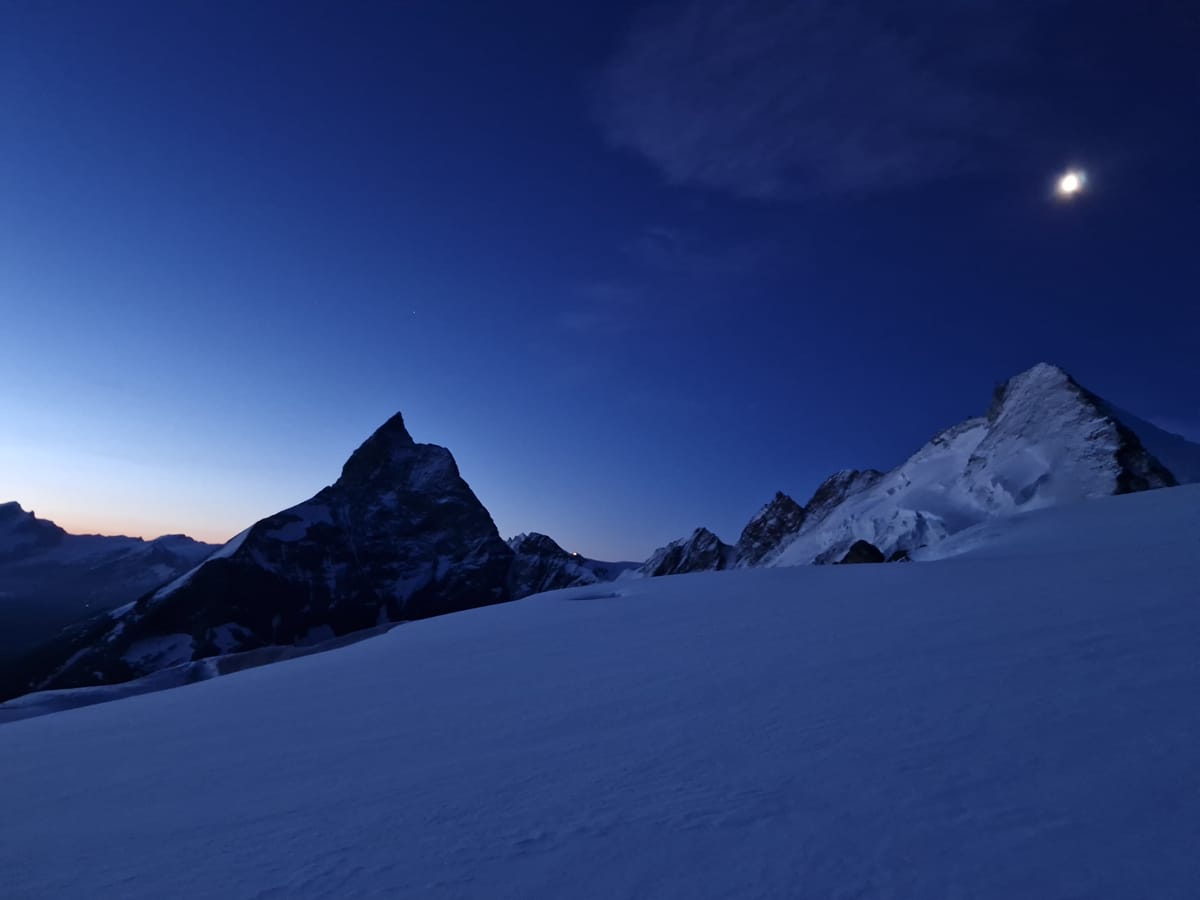
H+38 — It's Monday. I'm sitting in the CHUV cafeteria, drafting this post a few minutes before stepping into the surgery block. Inside my head, I am still somewhere between Zermatt and Cervinia.
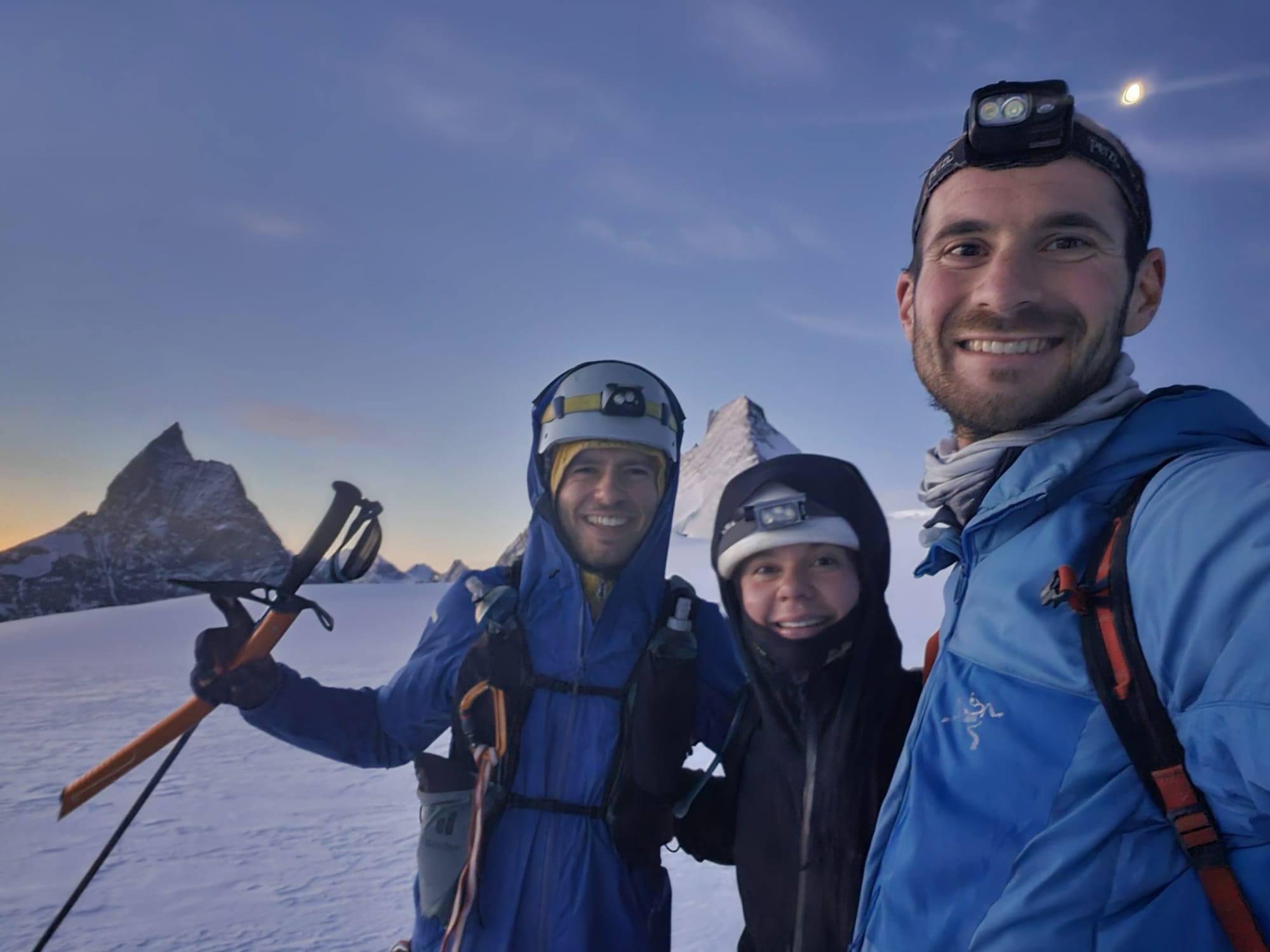
H0 — Last Saturday at 10pm, Fabio, Alex, and I left Zermatt with headlamps, heavy backpacks, and an unreasonable amount of enthusiasm for a plan that looked a little like organized suffering. Go up to the Col de Valpelline, cross into Italy, trail run to Cervinia. 50 kilometres, 3700 metres of elevation. Numbers that look almost reasonable on paper — although they do not give justice to the technical terrain, the endless rocky fields, and the glacier crossing that this so-called "trail run" quietly involves.
H+7 — Col de Valpelline. We cross into Italy as the sun rises. No snow until the glacier, a perfect refreeze overnight, firm and fast. We moved efficiently on the glacier under the stars. The hardest part is behind us. Or so we thought.
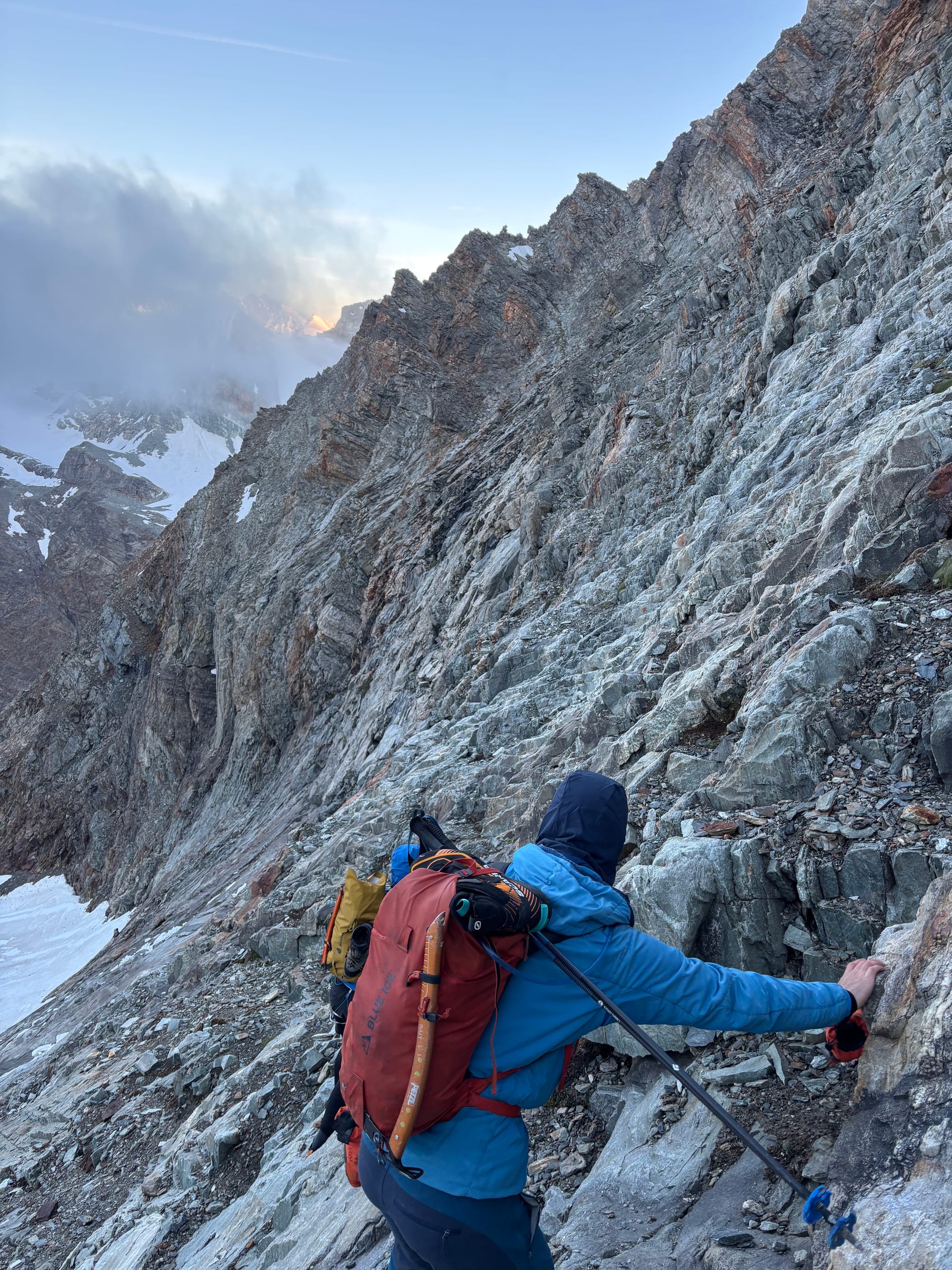
H+12 — After Prarayer, things got serious again. Ahead lies the climb to the Colle di Valcornera: loose rock, steep terrain, and a summit that seems to move further away every time you look at it. By then, my legs were advancing on their own, and my brain had largely checked out.
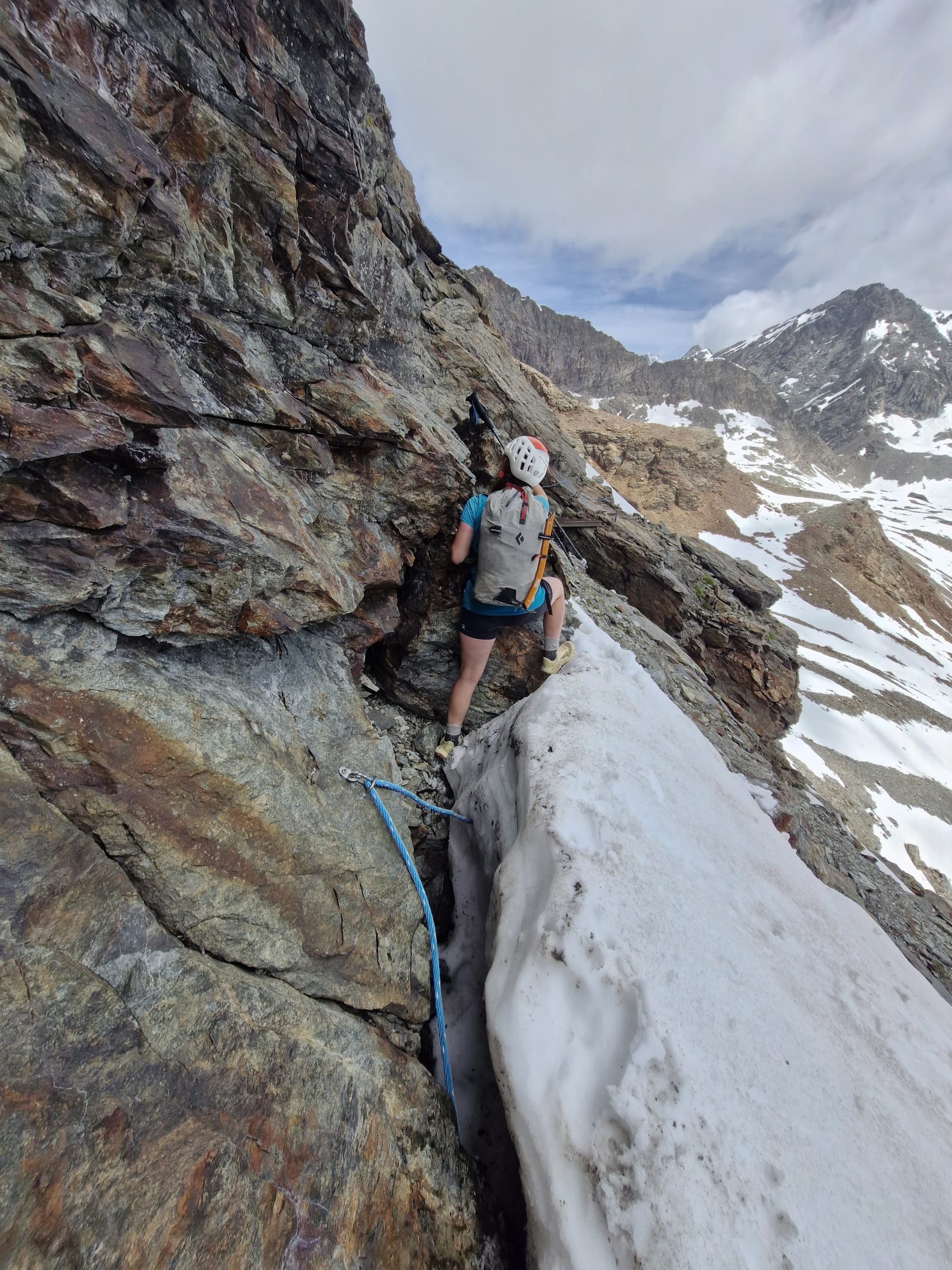
H+15 — If the climb felt long, the descent to Cervinia had its own way of keeping things interesting. Snow patches in all the wrong places, technical ground, and legs that had already worked a full day shift. But Alex and Fabio's experience got us through. Eventually, we reached one of the only rolling trails of the entire route — 7 km straight down to Cervinia. Fabio encourages, navigates, sets the rhythm. What still amazes me is that after 15 hours of effort, we were genuinely running downhill. Chasing the last gondola that would bring us back to Switzerland at 3pm — the one we were, let's be honest, never going to catch anyway.
H+17 — Cervinia. Gondola missed. Happy and tired faces. Alex and I hitchhiked our way to Lausanne — I fell asleep in each of the 3 cars that picked us up. Fabio, who was apparently feeling that 50 kilometres and 3700 metres of elevation was a pleasant warm-up, continued all the way back to Zermatt via the Theodule pass — rounding it up to 70 kilometres and 5000 metres of elevation. Just a Sunday.
These kinds of projects require a fairly precise understanding of your own body. Working in tight collaboration with your own limits— not ignoring them, but mapping them, and sometimes, gently extending them. How far can you go without sleeping? How sharp can you stay after 17 hours of continuous effort? How much can you run with a heavy pack still on your backs?
I don’t think the point is necessarily pushing those limits further and further. It's just a reminder of how extraordinary the human body is — and how little we usually ask of it. Most of us operate so far below them that we never really find out.
And every now and then, you end up surprising yourself. Something that looked completely unreasonable a few months ago suddenly becomes normal. Not easy, but possible.
That's probably what I enjoy most about these projects. Once you've expanded your idea of what's possible, new ideas start appearing everywhere. You look at a map differently. A line that would have seemed absurd before becomes an option. A traverse, a loop, a connection between two valleys. The mountains haven't changed. You've just updated the model.
The interesting thing is how quickly that picture can change. The brain, it turns out, is remarkably plastic. As for why our brains seem so good at recalibrating, hopefully I'll have a better answer by the end of my PhD. 😉
More to come. Obviously.
Cam's